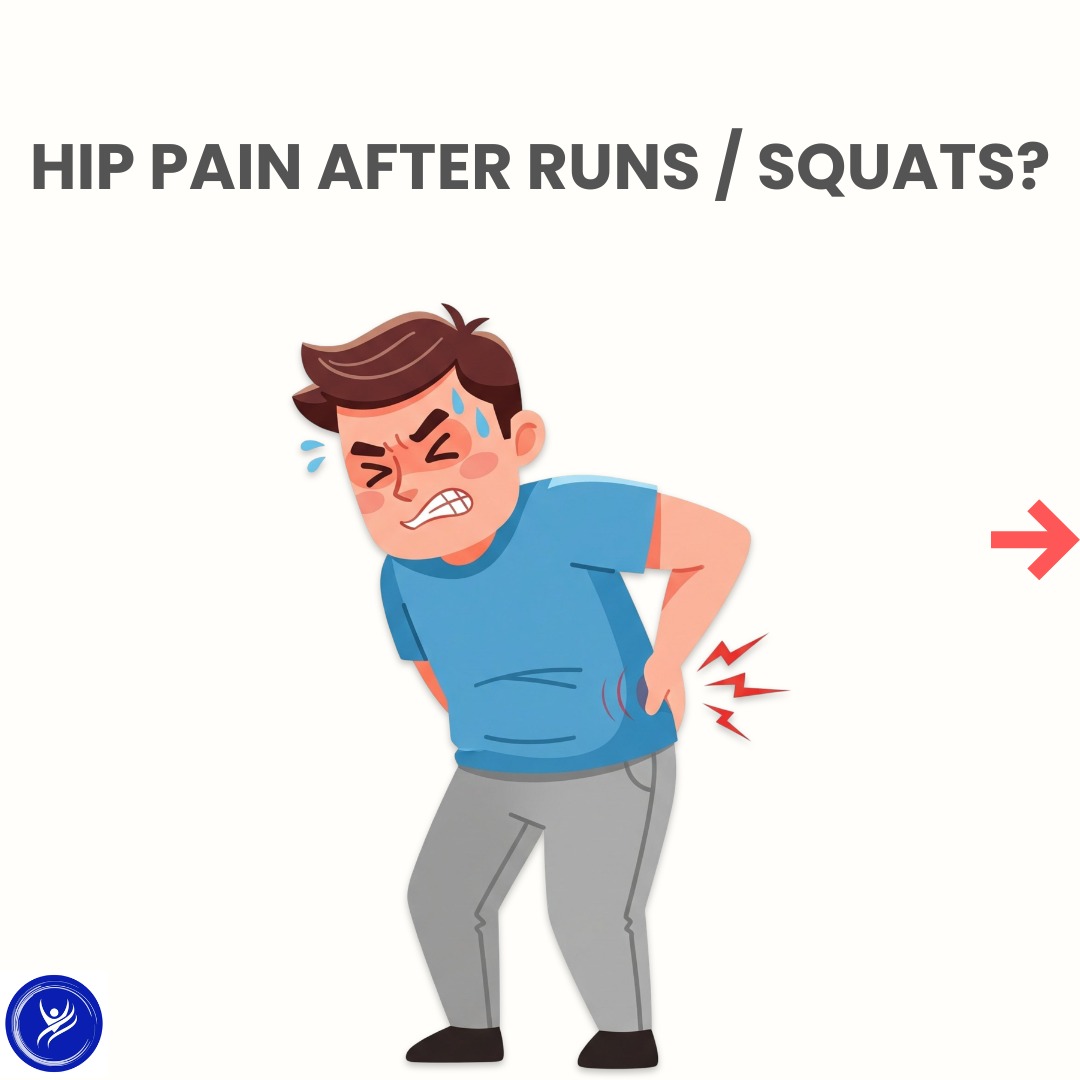
Hip or glute pain after a run or a squat session can feel frustrating — especially when you’re training consistently and doing “everything right.” The good news is that most of these aches aren’t mysterious injuries. They usually come down to three controllable factors: load, mechanics, and recovery.
Before making changes to your training or pain management, it’s important to speak with a qualified healthcare professional, especially if symptoms are sharp, persistent, or worsening. The information below is general and educational, not a personalised treatment plan.
🏋️♂️ Load: When Your Body Gets More Than It Can Handle
Load is simply the amount of stress you place on your tissues — volume, intensity, frequency, and even life stress all count.
Common load-related triggers:
- Sudden increases in mileage or weight — tissues don’t adapt fast enough.
- High-rep squat sessions without enough rest days — glutes and hip stabilisers fatigue and tighten.
- Running on hard surfaces or steep inclines — increases impact forces on the hips.
What load-related pain feels like:
- A dull ache in the glute or outer hip after training.
- Tightness that builds during a run or squat session.
- Pain that improves with warm-up but returns afterward.
Why load matters:
Muscles and tendons adapt beautifully when stress increases gradually. When the jump is too big, they protest — not because they’re “injured,” but because they’re overwhelmed.
🦵 Mechanics: How You Move Shapes How You Feel
Mechanics refers to your movement patterns — the way your hips, knees, feet, and trunk coordinate during running or squatting.
Common mechanical contributors:
- Hip drop while running — often linked to weak or fatigued glute medius.
- Knees collapsing inward during squats — shifts load to the outer hip.
- Overstriding when running — increases impact on the hips.
- Squatting too deep for your current mobility — forces compensations in the hips and lower back.
Signs mechanics may be the issue:
- Pain appears only during specific movements.
- One side hurts more than the other.
- You feel “off balance” or unstable during squats or runs.
Why mechanics matter:
Even small inefficiencies can compound over thousands of steps or reps. Improving technique often reduces pain faster than people expect.
😴 Recovery: The Missing Piece Most Runners & Lifters Overlook
Recovery is where your tissues actually get stronger. Without it, even perfect training can lead to pain.
Common recovery gaps:
- Not enough rest days between heavy sessions.
- Poor sleep, which slows tissue repair.
- Skipping warm-ups or cool-downs, leaving muscles stiff and reactive.
- High stress, which increases muscle tension and reduces resilience.
Recovery-related pain often shows up as:
- Morning stiffness.
- Tight glutes or hips that don’t loosen easily.
- Pain that improves after a rest day.
Why recovery matters:
Your body can only adapt to the load you give it if you give it time. Recovery isn’t optional — it’s part of the training.
🔧 Putting It All Together: Practical Fixes That Work
These general strategies are commonly used by coaches and clinicians to help reduce hip and glute discomfort:
- Reduce load slightly for 1–2 weeks — shorter runs, lighter squats, or fewer sets.
- Check your mechanics — small adjustments like shorter running strides or focusing on knee alignment during squats can make a big difference.
- Strengthen the stabilisers — glute medius, deep hip rotators, and core muscles help control movement.
- Add mobility work — gentle hip flexor, glute, and TFL stretches can ease tension.
- Prioritise recovery — sleep, hydration, and spacing out intense sessions support healing.
These are general principles, not personalised medical advice. A healthcare professional can help assess your specific symptoms and guide you safely.
🧭 When to Seek Professional Help
- Sharp or worsening pain.
- Pain that doesn’t improve after reducing load.
- Numbness, tingling, or weakness.
- Pain that interferes with daily activities.
📞 Contact Us
If you’re dealing with persistent glute pain or want personalised guidance, we’re here to help. Reach out anytime for support, assessments, or advice tailored to your needs.
📧 Email: info@linkedhealthcentre.co.za
📱 WhatsApp: 060 720 9666
🌐 Website: https://www.hardiechiropractic.co.za/
📅 Book an Appointment
If you’re ready to get personalised help, reduce your pain, and start moving better, you can book a session with us in just a few seconds.
If you found this article useful, feel free to read some of our article on Glute Pain Isn’t Always “Tight”: Here’s What’s Really Going On